F136 Titanium
Direct Factory
Response within 2 hours
Quick answers about ASTM F136 (Grade 23) titanium body jewelry manufacturing, documentation, and B2B services.
Tip: Search works across all questions and answers.
Material spec, composition, and why professionals prefer it.
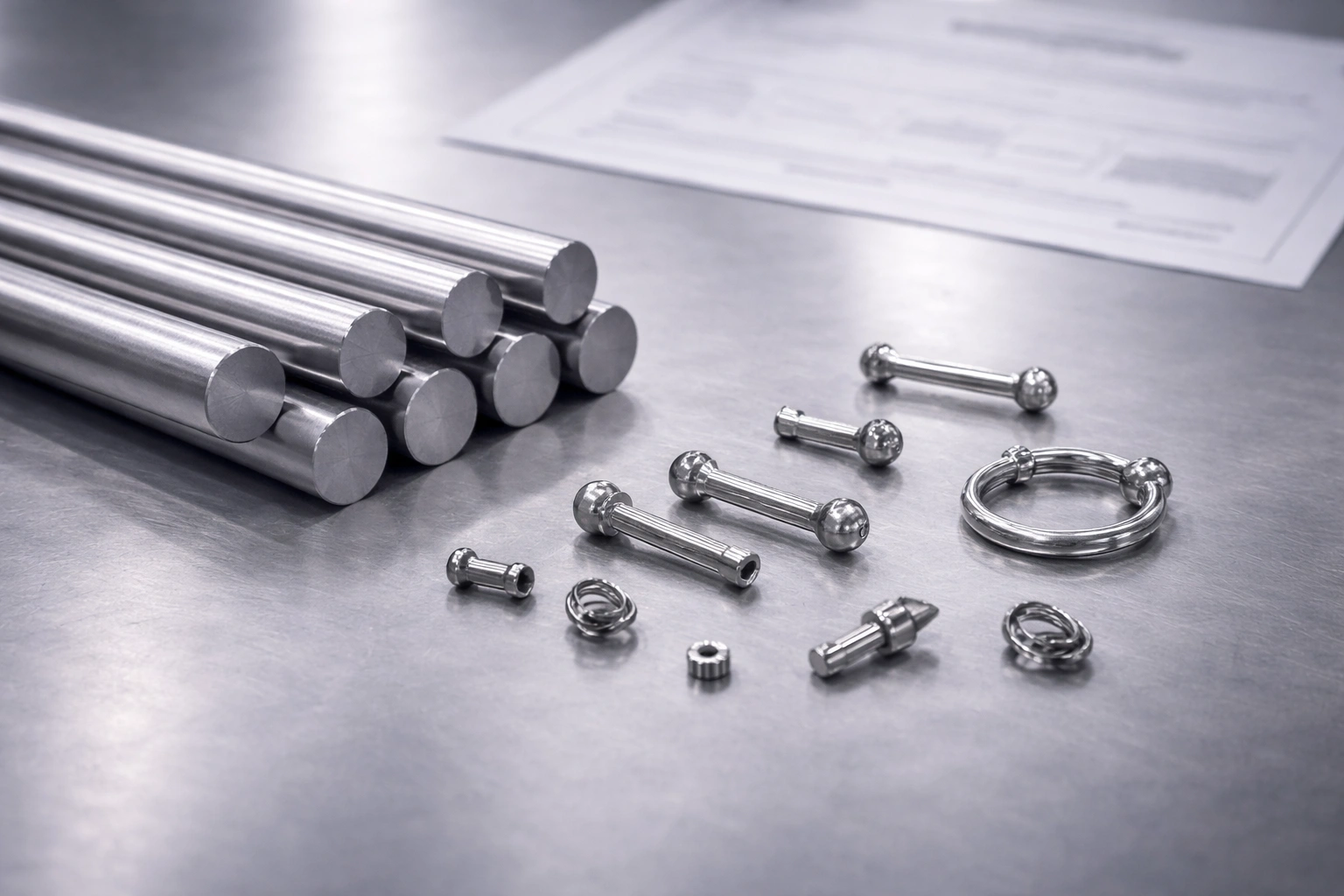
ASTM F136 is a widely recognized specification for Ti-6Al-4V ELI titanium alloy (often referred to as Grade 23). In body jewelry manufacturing, it is valued for its corrosion resistance, strength, and consistent material chemistry—especially important for professional piercing studios and distributors that require stable quality and documentation.
CoC, batch code, and document set availability.
Yes. We can provide documentation packages including Certificate of Compliance (CoC), material reports (as applicable), and batch-level traceability. For recurring SKUs, we maintain consistent batch coding and records aligned with our quality management procedures.
Naming, equivalence, and how it appears on paperwork.
In practice, ASTM F136 commonly corresponds to Ti-6Al-4V ELI (often called Grade 23). “ASTM F136” is the specification reference, while “Grade 23” is a commercial grade naming convention. Your documentation may list one or both depending on your compliance and customer requirements.
Note: Our products are body jewelry components supplied for professional and B2B use. They are not marketed as medical devices.
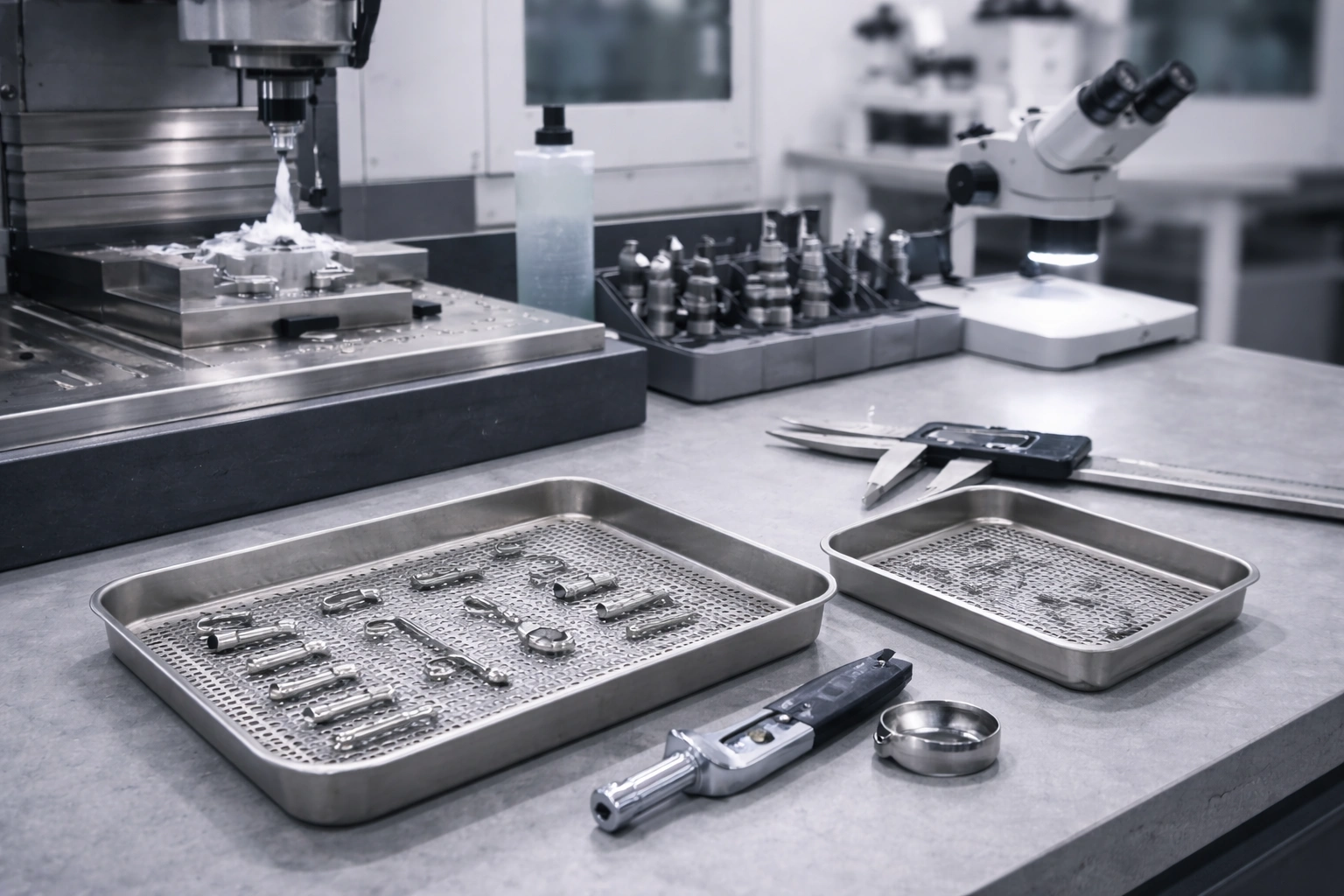
CNC machining, finishing, cleaning, inspection.
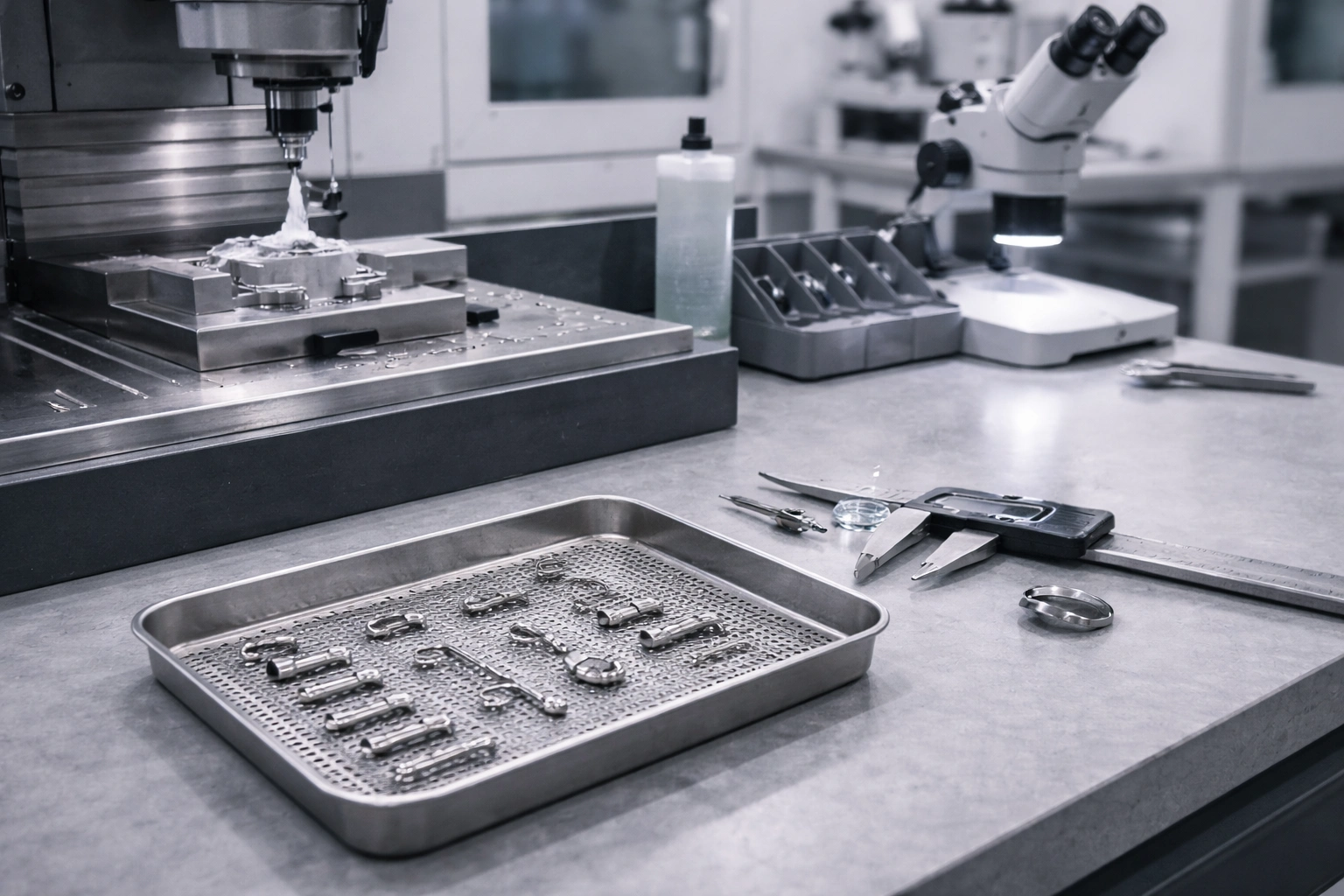
We primarily use CNC turning and milling for precision features, followed by deburring, progressive polishing or matte finishing, cleaning, and inspection. Process controls are designed to maintain dimensional consistency and stable surface quality across batches.
Capacity range and what affects it.
For non-medical-device supply of standard items, our typical capacity is 10,000–25,000 pcs/day. Actual output depends on SKU mix, machining complexity, threading system, and finishing requirements (polish, matte, anodized, etc.).
Incoming, first-article, in-process, final inspection.
We follow a documented QC flow including incoming inspection, first-article approval, in-process checks, and final inspection. For repeat SKUs, we standardize critical dimensions and finishing criteria, and retain batch records for traceability and after-sales support.
How tolerances are defined and confirmed.
Tolerances depend on the SKU, threading system, and feature geometry. For B2B projects, we confirm critical dimensions on drawings (or an agreed spec sheet) and validate during sampling/first-article inspection before mass production.
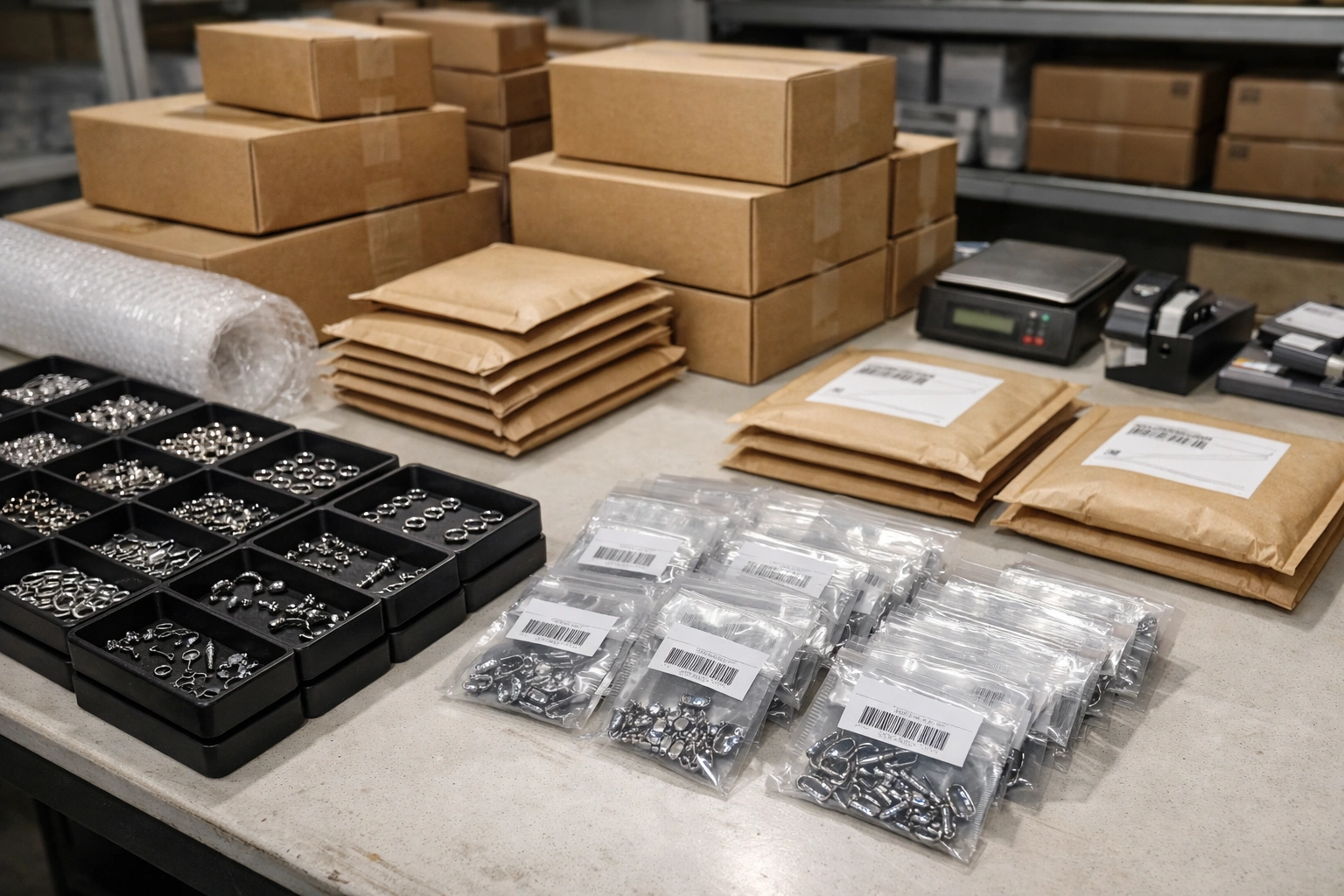
Stock, OEM, and private label baseline.
Typical MOQs (final depends on SKU and packaging requirements):
Order processing and logistics options.
Stock items typically ship within 3 business days after order confirmation and payment. Express options (DHL/UPS/FedEx) are available for urgent deliveries.
Sampling, production, repeat orders.
Timelines vary by complexity and order volume:
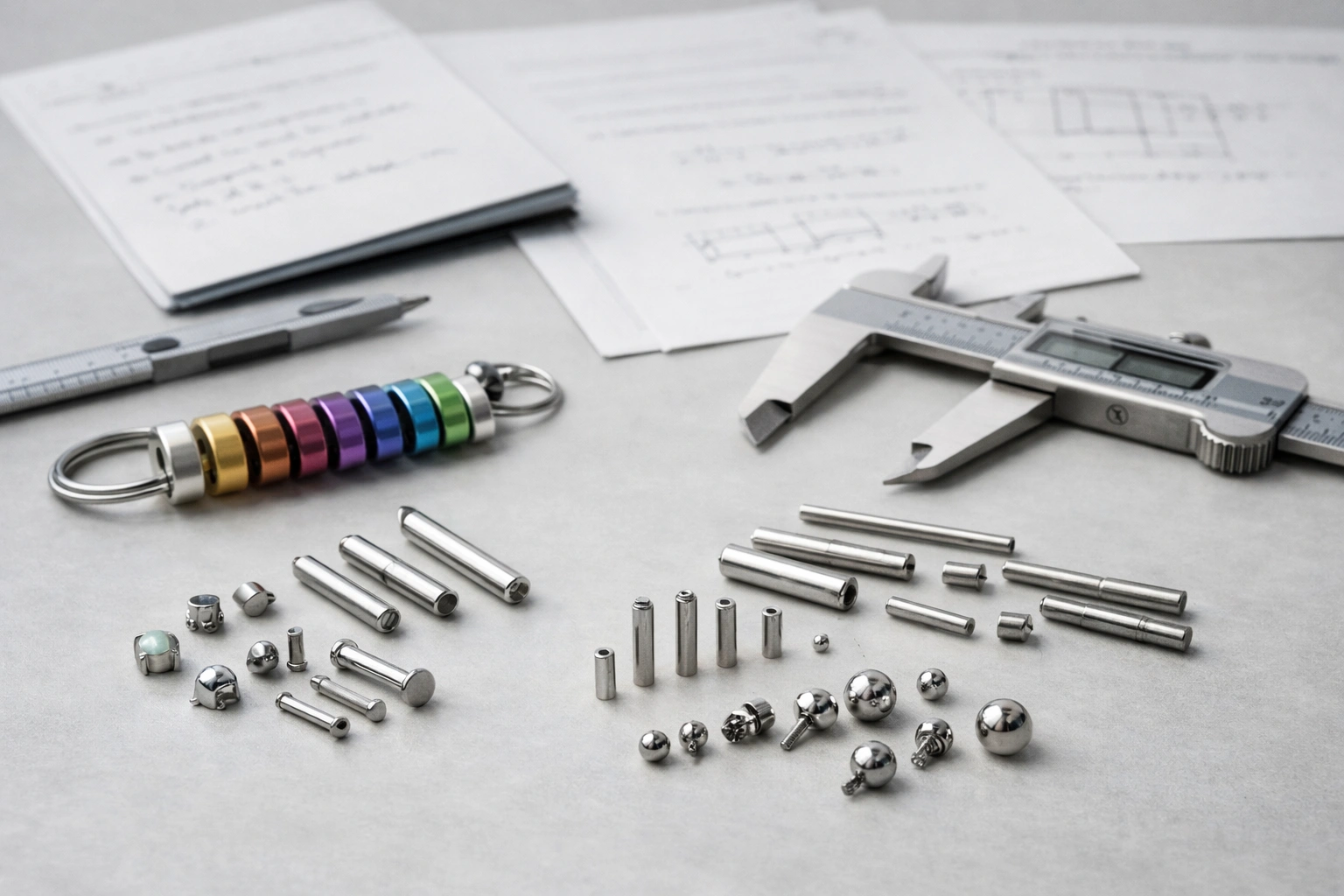
Specs, threading, finishing, packaging.
NDA support is available for OEM/ODM development projects.
ODM workflow, optimization, prototyping.
Yes. We support ODM from sketches, samples, or 3D files. The process typically includes feasibility review, design-for-manufacturing optimization, prototyping/sampling, and confirmed specifications prior to mass production.
Compatibility, retention expectations, and verification.
We can support threadless systems with defined pin and post specs. For compatibility, we confirm the agreed dimensions during sampling and validate fit/retention expectations based on the reference standard you provide.
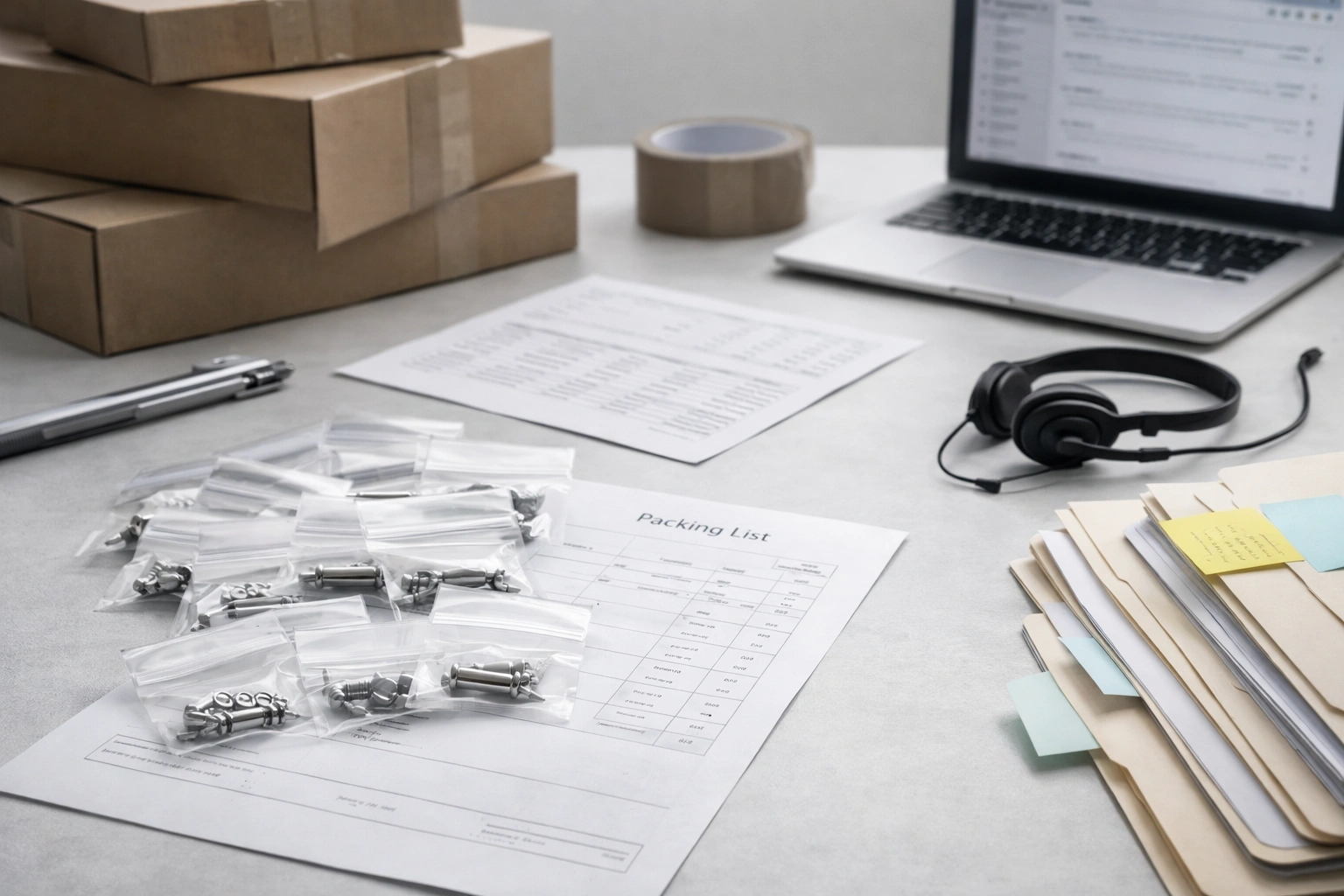
Courier, air/sea (for bulk), and common terms.
We ship globally, with frequent deliveries to the US, EU/UK, AU, and CA. Common options include:
We can support common trade terms (e.g., EXW/FOB; DDP by request depending on destination and shipment profile).
Investigation, evidence, remediation options.
We respond to reported quality issues within 2 business days and initiate investigation using batch code plus photo/video evidence. Depending on findings, remediation options may include replacement or credit. For B2B efficiency, we recommend confirming inspection criteria and sampling approvals before mass production.
Response expectations, quote timeline, and what to include.
During business hours (GMT+8), typical response time is within 2 business hours. For standard SKUs, quotes can be provided quickly. For OEM/ODM, we usually provide a detailed quote within 24–48 hours once key specs (gauge/length/finish/threading/packaging) are confirmed.
Send your specs and target market. We'll reply with factory pricing, sampling suggestions, and documentation options.